What Happens to Wood Chips After Stump Grinding
Quick Answer: After stump grinding, the stump is turned into a pile of coarse wood chips and sawdust that fills the hole and spills across the surrounding lawn. You have three good choices. You can reuse the chips as mulch in beds and around trees, you can have them hauled away, or you can mix part of them into the soil once the hole is ready to be restored. Fresh chips are safe to use on top of the ground, but they should not be buried deep in a planting area. Most Utah homeowners keep some for mulch and remove the rest before seeding or laying sod.
The mower blade clipped the edge of the old maple stump one more time in August, and the rattle made you wince. By October, the tree had been gone for two summers and the stump was still there, gray and split, with a ring of stubborn grass around it. Then the grinder came through. Within an hour the stump was gone, and in its place sat a mound of golden brown chips about the size of a small wheelbarrow load, warm to the touch and smelling like fresh cut lumber. Now you are standing at the edge of the yard with a rake in your hand, wondering what comes next.
That moment is where most homeowners in Salt Lake City, Draper, Orem, and the rest of the Wasatch Front have questions. The grinder did its job, but the job is not quite finished until you know what to do with everything it left behind. This guide walks through what those chips really are, how much of them to expect, what they can do for your landscape, what they should never be used for, and how to turn the spot into usable yard again.
What Stump Grinding Actually Leaves Behind
A stump grinder does not pull anything out of the ground. A spinning wheel with carbide teeth chews the wood away a few inches at a time, sweeping back and forth across the stump until the stump is ground below the surface. What comes out is a mix of chips, shavings, and fine sawdust, and it all lands in and around the hole it just made.
Chips And Sawdust
Stump grinding produces different textures. Dry, solid wood near the top creates coarse chips, while damp or decayed sections create finer, wetter material. Most piles contain both, affecting potential reuse as mulch.
Soil And Root Fragments
Grinding reaches ground level and below, mixing soil, small stones, roots, grass, and dirt into the pile. This is normal and harmless, but those materials affect how the grindings perform when used as mulch.
More Volume Than The Stump Itself
Ground wood occupies more space than solid wood because separated pieces no longer fit tightly together. Even one large stump can produce a surprisingly substantial pile that requires removal, spreading, or other management.
Roots That Stay In The Ground
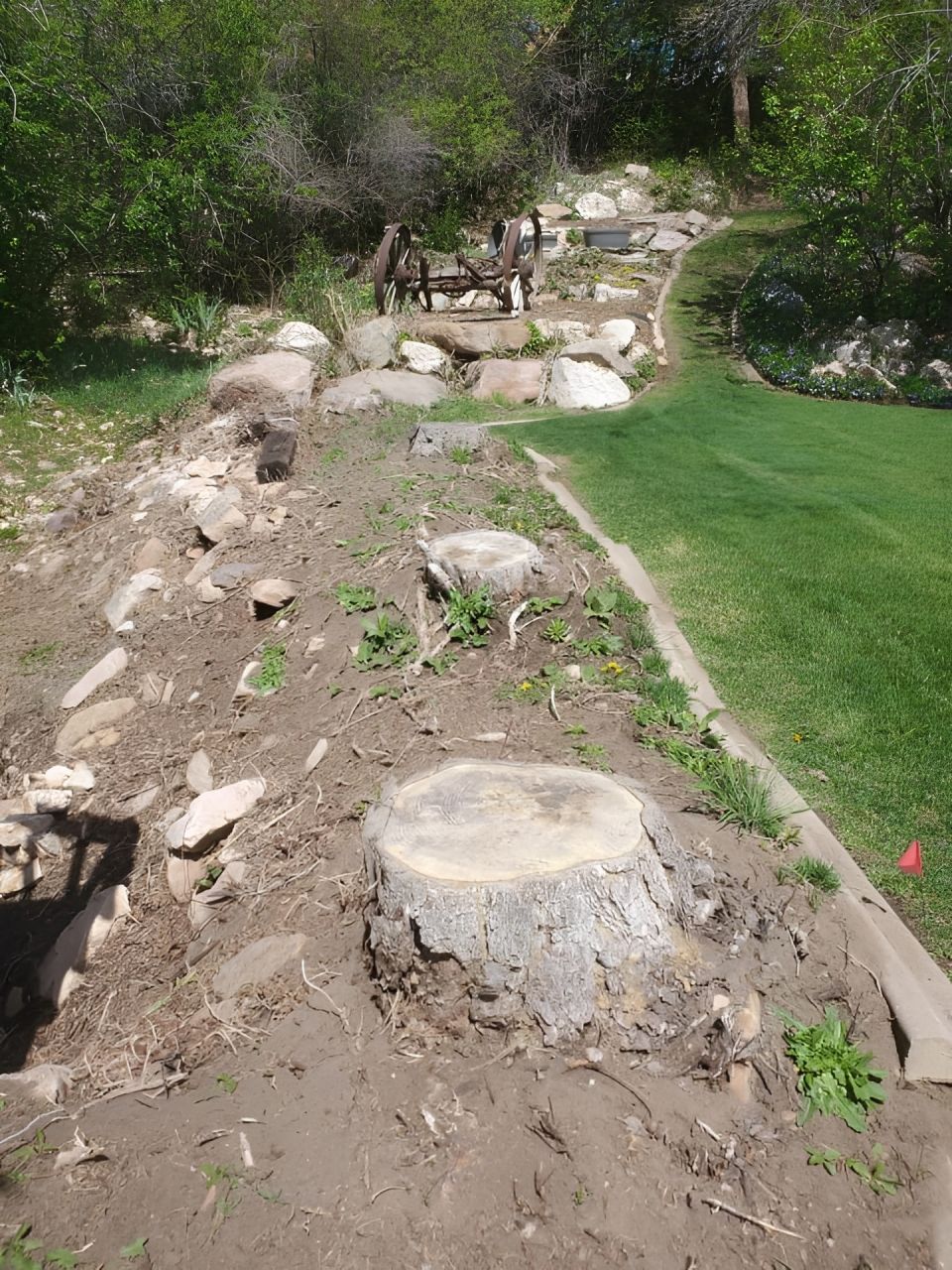
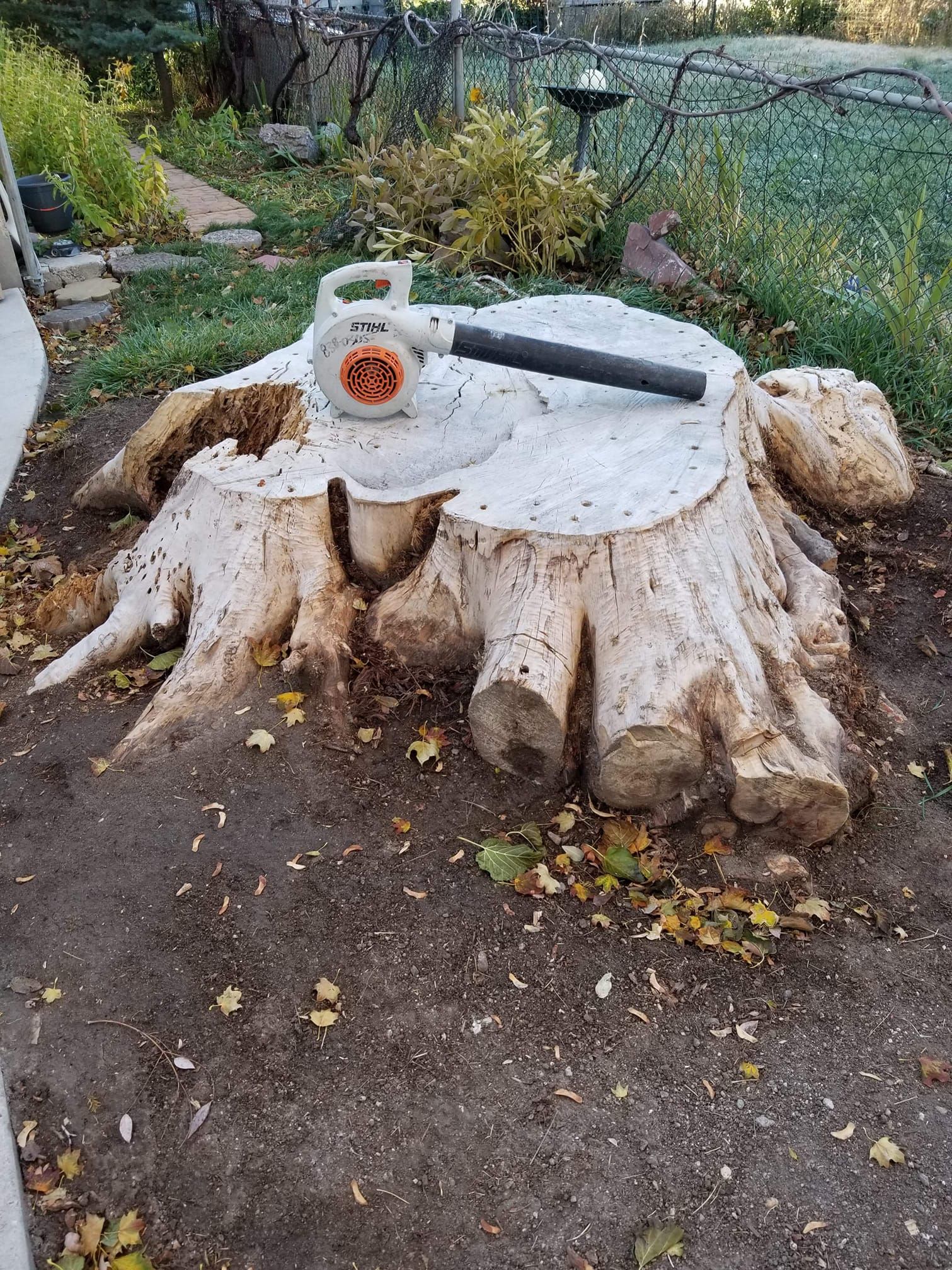
Stump grinding removes the main stump and accessible upper roots, while larger roots extending sideways remain underground. They gradually decompose, leaving shallow, wide holes and potentially uneven surrounding soil for several seasons.
The Utah State University Extension forestry team describes the forest floor as a natural mulch of twigs, leaves, and rotten wood that shades the soil, adds organic matter, and cuts down on competing grass. Ground stump material is a very close match for that description, which is one reason the chips are worth keeping when you can.
Three Things You Can Do With the Chips
Once the grinder is shut off, you have a short list of realistic options. None of them is wrong, and the best choice depends on how much material there is, what shape your yard is in, and what you plan to put in that spot next.
Reuse Them As Mulch
Coarse stump chips make useful mulch around trees and shrubs. Spread them four to six inches deep, keeping mulch away from trunks and stems.
Haul Them Away
Removing the pile makes sense when it contains substantial dirt, occupies planting space, or comes from diseased trees. Professional hauling leaves the area clean afterward.
Blend A Limited Amount Into The Soil
Small amounts of aged grindings can add organic matter to compacted soil. Avoid mixing large quantities of fresh wood into planting soil, which can cause problems.
A fourth choice is simply to leave the pile in place and let it settle while you decide. That works for a few weeks, but a loose mound of chips will blow around in a Utah windstorm and can wash into a driveway during a heavy rain, so it is not a long term plan.
How to Use Stump Chips as Mulch the Right Way
The most useful thing you can do with the grindings is spread them under trees and shrubs, but the details matter. A good mulch bed helps roots. A bad one can hurt them.
Spread To The Right Depth
USU and WSU recommend four to six inches of mulch around trees and shrubs. Fine, sawdust-heavy material can mat and shed water, so spread it thinner than coarse chips.
Keep It Off The Trunk
Keep mulch away from tree and shrub trunks, tapering it nearly flat near the bark. Piled mulch holds moisture, encourages insects, and increases rot risk. Leave several inches uncovered around trunks.
Cover A Wide Area
Most tree roots grow within six to twelve inches of the surface. A wide mulch bed protects more roots while keeping mowers and trimmers away from bark, reducing common landscape damage.
Worry Less About Nitrogen
Fresh wood chips used as surface mulch generally do not create nitrogen deficiencies, according to WSU Extension. Problems are more likely when fresh wood is mixed deeply into planting soil.
Tip: Spread the chips on the same day the grinding is done while they are loose and easy to move. Lay cardboard or a thin layer of finished compost under the chips in a new bed, rake the pile out to a depth of about four inches, and pull it back from every trunk so a few inches of bare soil show.
Know What The Mulch Does For A Utah Yard
Salt Lake Valley summers are hot and dry, while clay soils can bake and crack. Organic mulch slows evaporation, moderates soil temperatures, and helps retain moisture, supporting plants through demanding conditions.
When Stump Chips Are the Wrong Choice
Beyond the visual impact, a stump takes up ground that could otherwise be doing something for the property. A yard with a stump removed and the area leveled and reseeded gains usable square footage, whether that space ends up as open lawn, a garden bed, a patio extension, or simply room for kids or pets to move through without an obstacle in the way.
That reclaimed space matters more in smaller or narrower yards, where a stump sitting in the wrong spot can block an obvious path between the house and a fence line, or sit right where a buyer would picture a patio, a swing set, or a garden. In a larger yard, a stump tucked in a back corner might not carry the same weight. Near the front of the property or anywhere visible from the street, it almost always does.
What to Do With the Hole After the Chips Are Gone
The stump is gone, but the spot is not yet ready to plant. The hole and the area around it need to be dealt with before grass or a new tree goes in.
Clear Out Most Of The Grindings
Remove most stump grindings, then fill the hole with fresh soil and level it. Decaying wood can shrink, causing future settling.
Fill With Clean Soil
Use quality topsoil or topsoil mixed with compost. Fill gradually, compact each layer, and leave the surface slightly raised for settling.
Expect Settling
Soil continues settling after filling. Water gently, then add more soil after several weeks. Slow soaking helps settle dry Wasatch Front soil.
Seed Or Sod
Prepare a level, loose surface free from chunky wood. Sod can be installed immediately, while seed performs best during cooler, wetter seasons.
Plant A New Tree In A Different Spot
Plant replacement trees several feet away from the old stump. Undisturbed soil provides better stability than loose, settling ground containing decaying roots.
Why Fresh Chips Should Not Be Buried Deep
It can be tempting to push the whole pile back into the hole and call it done. This is where many do it yourself restorations go wrong.
Wood Breaks Down In The Ground
Microbes decomposing fresh wood use nitrogen. Large amounts buried near roots can temporarily reduce available nitrogen, unlike wood chips used as surface mulch.
The Surface Sinks
Buried wood chips shrink as they decompose. Holes filled mainly with grindings can settle several inches, creating low spots that collect water.
Roots Struggle In Loose Wood
New trees need firm, well structured soil around their roots. Loose wood chips hold moisture unevenly, causing roots to dry out or remain overly wet.
Warning: Do not plant a new tree or shrub directly into a hole filled with fresh grindings. The decaying wood draws down nitrogen, settles unevenly, and leaves new roots in loose material that dries out fast. Remove the chips from the planting area and replace them with clean soil first.
A Better Use For The Leftover Fines
Fine sawdust can go on paths or compost with grass clippings and kitchen scraps, creating useful material as it breaks down.
How Much to Keep and How Much to Remove
The right amount of material to keep comes down to how big the pile is and what you plan to do with it. A few quick checks can help you decide.
Measure Your Beds
Measure shrub borders and tree rings needing mulch. Spread chips four to six inches deep, then see whether the pile covers them.
Check The Mix
Coarse chips resembling bark mulch are best for reuse. Fine, wet, dirt filled material is usually better removed or composted.
Do Not Let It Sit
Do not leave stump grindings on the lawn. Spread them thinly or arrange removal, because thick piles can kill grass.
Think About Timing
Use stump chips in late fall to insulate roots before freezing, or spring to conserve moisture before summer heat arrives.
Ask What Is Included
Ask the tree service whether cleanup includes spreading, leaving, or hauling away grindings. Confirm beforehand to prevent unexpected responsibilities and surprises.
Why Grinding Depth and Cleanup Both Matter
The amount and quality of the material you get depends on how the job is done, which is why it helps to hire a crew that treats the cleanup as part of the work.
Depth Sets The Volume
A stump ground several inches below grade produces less material than one ground a foot deep. Deeper grinding creates more planting space but also leaves additional chips that require management afterward.
Skilled Operators Leave A Cleaner Site
Careful operators make even grinding passes, control where chips scatter, and rake afterward. Good cleanup leaves a manageable pile for reuse rather than debris spread throughout the surrounding yard.
Property Protection Counts
Tight Salt Lake County yards may have fences, irrigation lines, and nearby homes. Skilled crews control equipment and debris carefully, while marking sprinkler heads and buried utilities beforehand helps prevent damage.
An Arborist's Eye Helps
A crew led by an ISA Certified Arborist with more than 31 years of experience can help determine whether grindings suit reuse and what planting choices may work around the former stump location.
Planning the Spot After the Stump Is Gone
Once the chips and hole are handled, you can put the space to work. A few ideas fit the Salt Lake area well.
A New Tree In A Better Location
Choose a Utah suitable tree, provide growing room, and plant it beyond the old stump footprint.
A Mulched Planting Bed
Use saved chips around drought tolerant perennials or shrubs, keeping mulch away from stems and trunks.
A Patch Of Lawn
Fill and level the area, then seed or sod it and water until established and blended.
A Patio Or Play Space
Turn the cleared area into a firepit, seating space, or swing area for practical outdoor use.
Frequently Asked Questions
Do wood chips from stump grinding make good mulch?
Yes, in most cases. Coarse chips from a healthy tree work well spread four to six inches deep and kept off trunks. Fine sawdust mats down, so use it thinly or compost it.
Will stump chips steal nitrogen from my plants?
Not when used as mulch on top of the soil. The concern applies to fresh wood mixed deep into the soil, where microbes pull nitrogen away from roots.
How long do the wood chips take to break down?
Coarse chips usually take a year or more, and decay is slower in a dry Utah climate. Finer material breaks down faster, and you can top up the layer yearly.
Should I leave the chips in the hole where the stump was?
It is better not to. Chips shrink as they decay, which causes sinking. Remove most of them and fill the hole with clean soil in layers.
Can I plant grass right after the stump is ground?
Yes, once the spot is prepared. Clear the chips, fill and level the hole with good soil, and press it firm. Sod can go down right away, while seed does best in early fall or spring.
Will a tree service take the chips away if I ask?
Many will. Some leave the pile, some spread it, and some haul it off, so ask when you book the job.
Finish the Spot and Put the Chips to Work
A ground stump is only half of a finished yard. The other half is what you do with the pile, the hole, and the open patch of ground. Spread the coarse chips under trees and shrubs at four to six inches deep, keep them clear of the trunks, haul off dirty or diseased material, and fill the hole with clean soil rather than buried wood. Do those few things and the spot blends back into the lawn within a season.
With 31
years of experience
grinding stumps
in Salt Lake City, UT, Utah Stump Grinding LLC
has seen how much a careful cleanup shapes the final result. Choosing which chips to keep, which to remove, and how to restore the soil keeps the yard level and healthy long after the machine leaves. Homeowners who treat the cleanup as part of the job usually enjoy a smoother lawn, fewer sunken spots, and mulch beds that hold moisture through the dry Wasatch Front summers.